
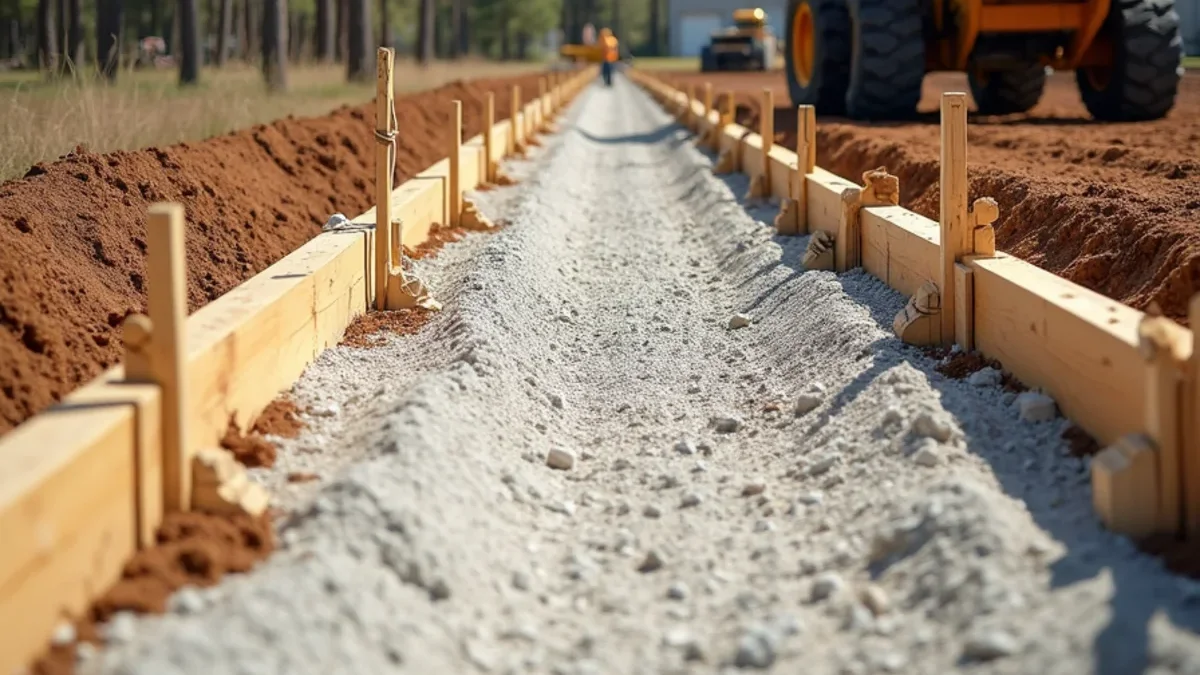
Aiken County's Sandhills geology consists of deep, cohesionless quartz sand over kaolin clay lenses, creating rapid drainage alongside severe subgrade washout vulnerability. Concrete poured here must feature complete organic stripping, a minimum 4-inch compacted aggregate base (crusher run), tied #4 rebar elevated on chairs, and laser-calibrated drainage slopes.
The Aiken Sandhills Geology: Ancient Coastal Dunes and Quartz Sand
To understand why concrete flatwork succeeds or fails in Aiken County, you have to understand what lies beneath your feet. Millions of years ago during the Cretaceous and Tertiary epochs, the Atlantic Ocean coastline rested directly across central South Carolina—a geological boundary known today as the Fall Line. As ancient seas receded, they left behind massive, rolling deposits of pure marine quartz sand known as the Carolina Sandhills.
Across North Augusta, Aiken, Belvedere, and Wagener, native soils consist primarily of Lakemont, Fuquay, and Troup soil series. These soils are deep, coarse, and highly porous. While sandy soils have excellent initial drainage, they possess virtually zero cohesion. Unlike cohesive clay soils that bind together when dry, dry Sandhills sand behaves like beach sand—slipping through your fingers and shifting under point loads.
Building durable flatwork in this environment requires specialized engineering—such as our certified Concrete Driveway Installation and structural Concrete Slabs & Foundations systems—tailored specifically to Sandhills hydrology.
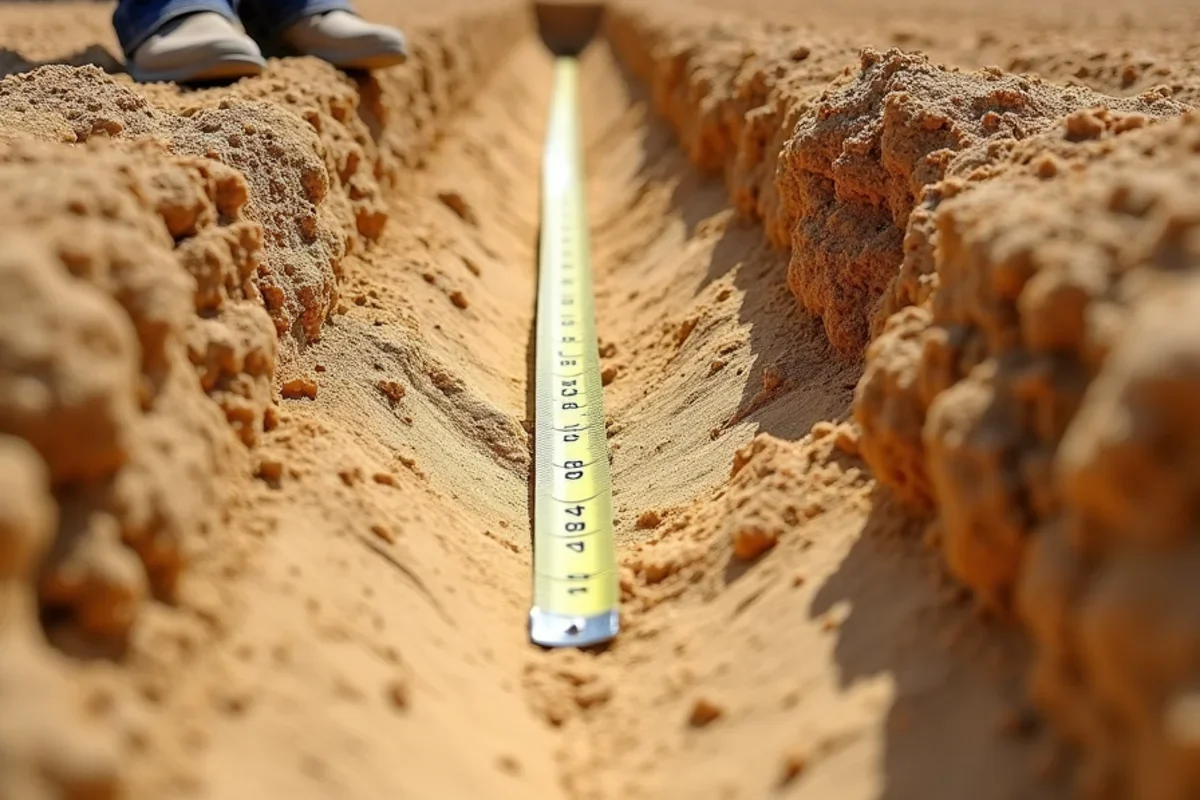
Why Uncontained Sandhills Soil Destroys Concrete Slabs
When an uncredentialed contractor pours a concrete driveway or patio directly over native Aiken sand, three catastrophic structural failures occur:
1. Lateral Shoulder Sloughing Concrete weighs approximately 150 pounds per cubic foot. When a heavy passenger vehicle or pickup drives along the outer edge of a driveway poured over sand, the downward pressure pushes the loose sand outward into the lawn. Without an engineered shoulder or compacted aggregate cushion, the sand sloughs away, leaving an unsupported concrete cantilever that snaps off in jagged triangular chunks.
2. High-Velocity Storm Washouts Aiken County experiences severe summer thunderstorms delivering 2 to 4 inches of rain in under an hour. Because quartz sand lacks clay binders, torrential rainwater scours channels under slab edges at alarming speed. A single severe storm can flush several wheelbarrows of sand out from beneath a patio, leaving massive subterranean voids.
3. Vibration Settlement Loose sand grains naturally hold air pockets. Daily vehicle traffic creates ground vibrations that shake sand particles together, consolidating the subgrade over 2 to 5 years. If the sand was not mechanically compacted to high density prior to pouring, the driveway settles unevenly, tearing control joints apart.
The Kaolin Clay Factor: Horse Creek Valley Hydrology
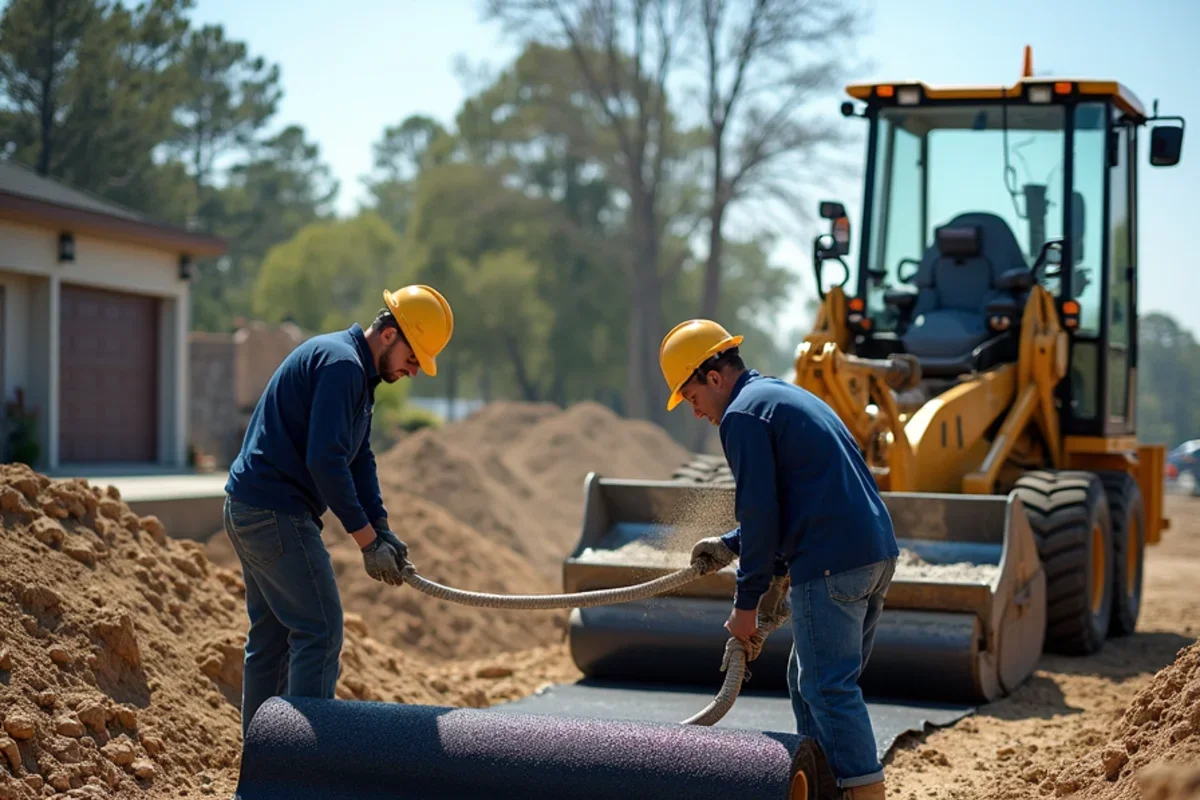
A unique geological feature of Aiken County is the presence of world-famous kaolin clay deposits concentrated along the Horse Creek Valley (stretching through Graniteville, Langley, Clearwater, and Warrenville).
Kaolin is an ultra-fine, chalk-like aluminum silicate clay that is virtually impermeable to water. In many Aiken neighborhoods, a 2-foot layer of loose quartz sand sits directly atop an impermeable subterranean kaolin shelf:
- Perched Water Tables: During rainy winter months, rainwater percolates through the sand but hits the kaolin barrier, creating a trapped 'perched water table' just 12 inches below the surface.
- Subterranean Mud Slides: As water glides horizontally along the slippery kaolin surface, it carries the upper sand matrix with it, creating sudden catastrophic sinkholes and hollow cavities beneath residential driveways.
The 4-Inch Crusher-Run Bridge: Engineered Subbase Solutions
How does FPC Construction build concrete flatwork that outlasts Aiken County's sandy soils? We engineer a crushed stone bridging cushion:
- Excavation of Loose Organic Sand: We strip 4 to 6 inches of topsoil down to undisturbed subgrade.
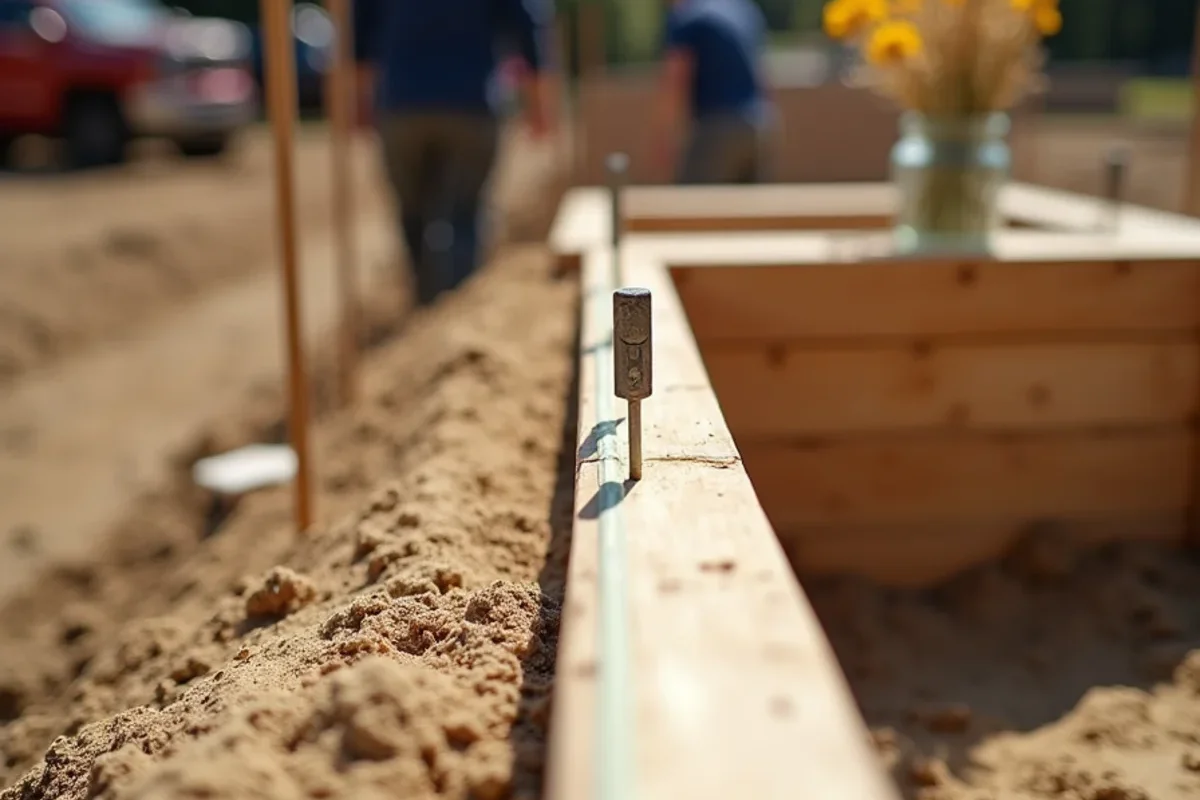
- Geotextile Stabilization Fabric (When Required): In areas with active groundwater or deep sand, we lay non-woven geotextile fabric. The fabric acts as a structural separator, preventing crushed stone from sinking down into the loose sand while allowing water to drain freely.
- 4 Inches of Compacted CR-14 Crusher Run: We install South Carolina DOT approved crushed granite stone (CR-14). Crusher run contains sharp, angular granite rocks ranging from 1.5 inches down to fine stone dust.
- Mechanical Vibratory Compaction: We compact the stone in 2-inch lifts to 95% Standard Proctor density. When compacted, the angular stone faces lock together into an unyielding monolithic bridge that distributes vehicle weight across several square feet, completely shielding the loose sand underneath.
Preventing Driveway Shoulder Erosion and Edge Undermining
To prevent stormwater from washing sand out from underneath your concrete driveway in Aiken County, our installations incorporate three critical erosion defenses:
- Thickened Perimeter Edge Footings: Along driveway edges and turnaround pads, we excavate 6-to-8-inch deep turn-down edges. This thickened concrete barrier anchors into the subgrade, blocking rainwater from channeling beneath the main slab.
- Extended Aggregate Shoulder Beds: We extend our compacted crushed stone base 6 inches beyond the concrete formwork on both sides. This stone shoulder armors the slab edge against tire run-offs and lawn mower wheels.
- Topsoil Backfill and Seed Armoring: Immediately after stripping form boards, we backfill slab edges with compacted topsoil, grade a smooth 3:1 taper away from the concrete, and seed with deep-rooting Bermuda or Centipede turf to bind the soil.
Aiken County Building Codes and SCDOT Encroachment Permitting
When installing a driveway apron that connects to a public roadway in Aiken County, property owners must comply with local jurisdiction standards:
- State Highway Connections: Any driveway connecting to South Carolina Department of Transportation (SCDOT) maintained roads—including Whiskey Road (SC-19), Jefferson Davis Highway (US-1), and Pine Log Road—requires an SCDOT Encroachment Permit. Driveway aprons must be poured at a minimum 6-inch thickness with 4,000 PSI concrete and maintain roadside ditch drainage flow.
- County Zoning Setbacks: Driveways and accessory building pads in unincorporated Aiken County must adhere to local property line setback rules and stormwater management ordinances.
FPC Construction manages all SCDOT encroachment permit applications, sight-distance engineering, and municipal building approvals on your behalf.
Next Steps: Build With Aiken County Concrete Experts
Do not let shifting Sandhills sand ruin your concrete investment. Contact FPC Construction at (833) 334-0468 for a free on-site geotechnical inspection, laser grade survey, and detailed written proposal within 24 hours.
Soil Density Verification and Proof-Rolling Inspections
Before placing ready-mix concrete over loose Sandhills sand in Aiken County, our lead project technicians perform proof-rolling tests across the compacted aggregate bed. Heavy loaded transit mixers or skid steers are driven across the stone foundation; if any tire rutting or subgrade deflection is observed, the area is excavated deeper and re-compacted with crushed granite stone. This rigid quality control prevents future panel settlement under daily vehicle traffic.
Speak Directly with a South Carolina Concrete Specialist
Guaranteed 1-hour callback · On-site evaluation in 48 hours · Free written estimate
Article Frequently Asked Questions
Key takeaways and common homeowner inquiries answered by our concrete team.