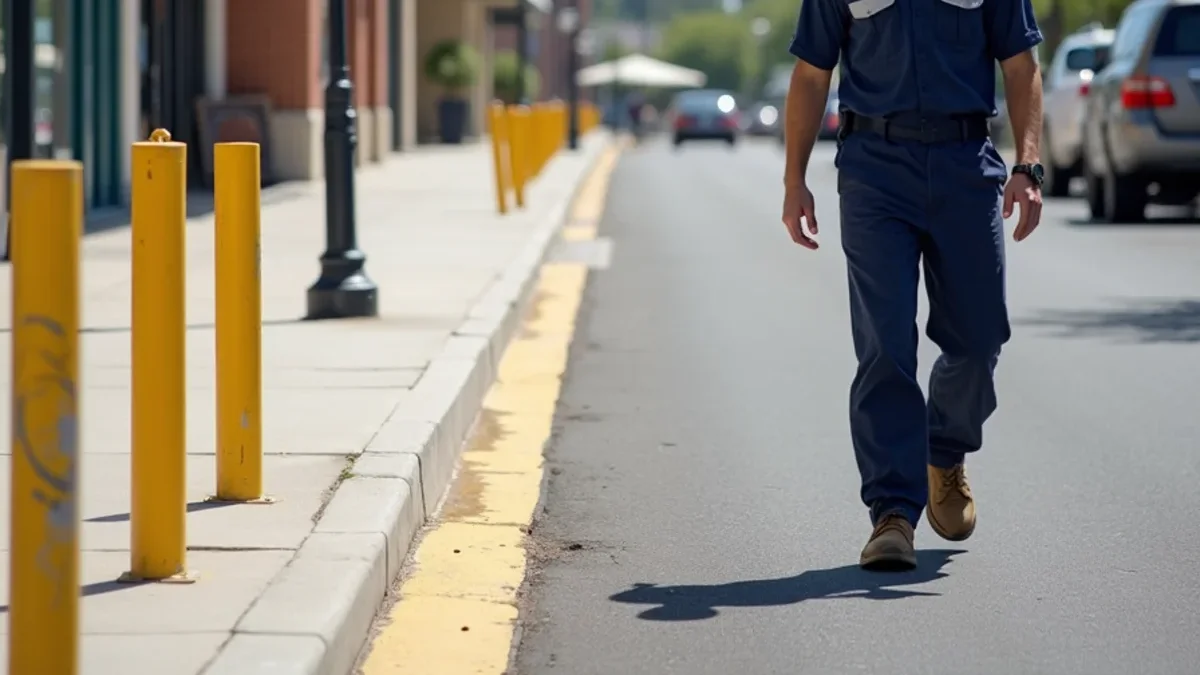
Commercial property managers in South Carolina face substantial premises liability risks from broken sidewalks, cracked parking aprons, and settling dumpster pads. Managing concrete assets requires quarterly ADA Title III inspections, tracking vertical trip offsets exceeding 1/4 inch, saw-cutting failed panels along joint lines, and installing rebar-doweled 4,500 PSI commercial flatwork.
Premises Liability and ADA Title III Risks for Property Managers
For commercial facility managers, retail strip center owners, HOA directors, and industrial plant managers across North Augusta, Aiken County, and the Midlands, exterior concrete flatwork is a major operational liability. Under South Carolina premises liability law and federal ADA Title III mandates, property owners owe a strict legal duty of care to ensure walkways, parking areas, and building entrances are safe and accessible for customers, employees, and visitors.
A single pedestrian trip-and-fall on an uneven sidewalk joint can result in personal injury claims averaging $30,000 to $100,000+ in medical expenses, lost wages, and legal defense costs. Insurance carriers frequently audit commercial properties, threatening policy cancellation or exorbitant deductible increases if concrete tripping hazards remain unaddressed.
Investing in dedicated Commercial Concrete maintenance and certified Sidewalk Trip Hazard & ADA Repair protects your commercial assets while maintaining compliance with local building codes.
The Quarterly Commercial Concrete Facility Inspection Protocol
Property managers should execute a formal, documented quarterly walking inspection of all exterior concrete assets:
Step 1: Pedestrian Walkways and Storefront Sidewalks - Walk all building perimeters with a calibrated 1/4-inch gauge tool. Flag every sidewalk joint or crack where vertical displacement meets or exceeds 1/4 inch. - Inspect building threshold transitions. Ensure door landing thresholds do not exceed 1/2 inch in total rise. - Check ADA curb ramps for missing or damaged truncated dome tactile warning tiles.
Step 2: Vehicular Parking Bays and Drive Aisles - Inspect parking bays for severe oil saturation, subgrade rutting, and sunken catch basin collars. - Check extruded concrete curbs for vehicle impact fractures that expose sharp rebar.
Step 3: Service Corridors and Loading Docks - Evaluate heavy loading zones for slab punch-through, spalled control joints, and joint edge raveling caused by steel-wheeled forklift traffic.
High-Stress Zones: Dumpster Enclosures and Loading Aprons
Commercial flatwork fails most frequently in two localized, high-stress zones:
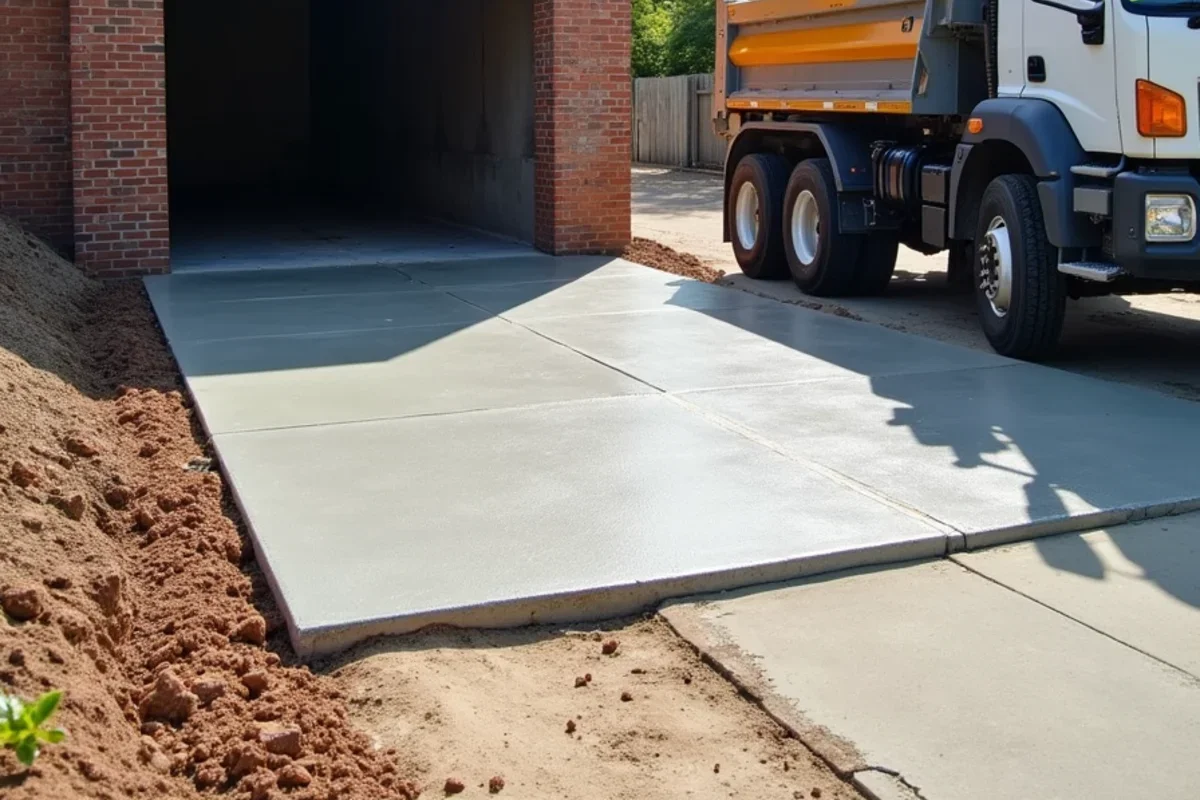
1. The Commercial Dumpster Enclosure Standard passenger car parking lots are designed for vehicles weighing 4,000 pounds. A loaded commercial front-load waste collection truck weighs 55,000 to 65,000 pounds. When the truck lifts a 6-yard steel dumpster full of restaurant or retail trash, that immense weight transfers entirely onto the truck's front steering axles. Poured 4-inch parking lot concrete will pulverize under this point load within weeks. Dumpster pads must be poured at a minimum 6 to 8-inch thickness with 4,500 PSI concrete and tied rebar.
2. Loading Dock Aprons Semi-truck tractor-trailers dropping landing gear exert massive static point loads on concrete loading aprons. Furthermore, wheel torque from tight backing turns grinds unreinforced surface paste away. Loading aprons require 7-to-8-inch thick slabs with dowel basket contraction joints to prevent panel faulting.
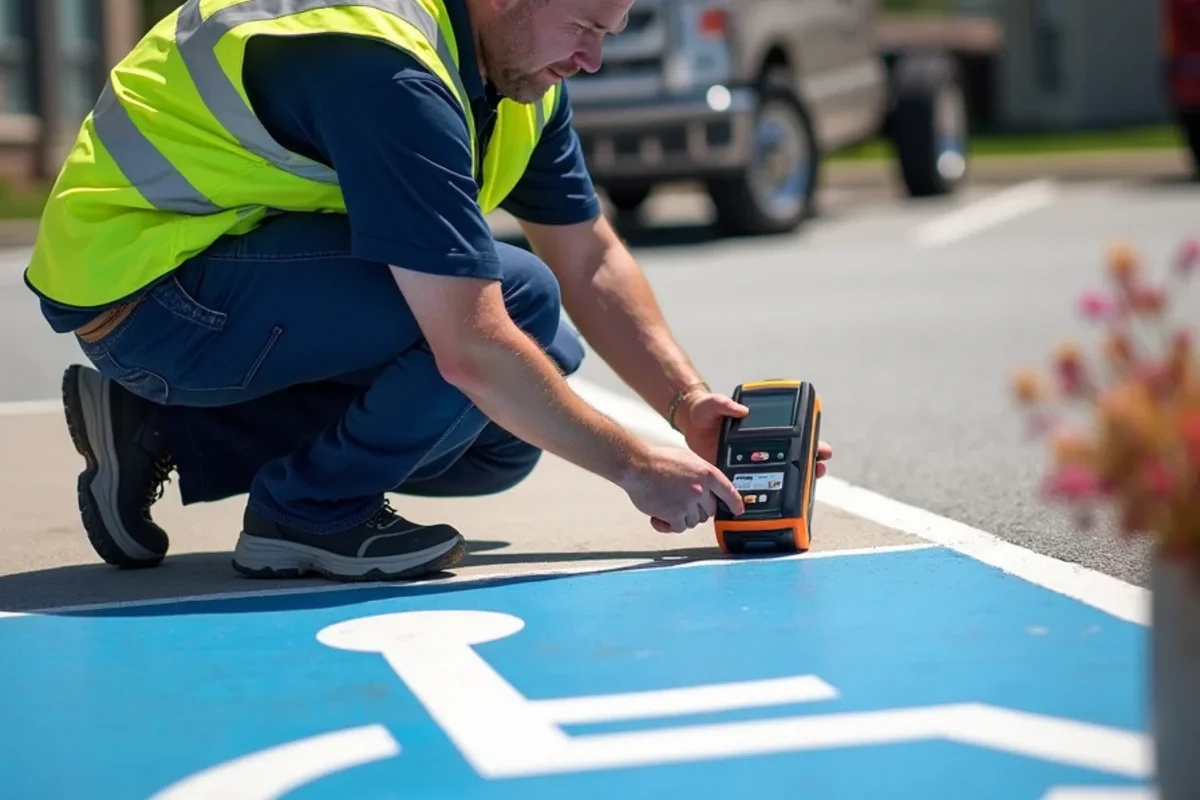
Commercial Repair Methods: Shaving, Poly Foam & Night Pours
Minimizing business interruption is critical for commercial repairs. FPC Construction deploys three high-efficiency commercial remediation methods:
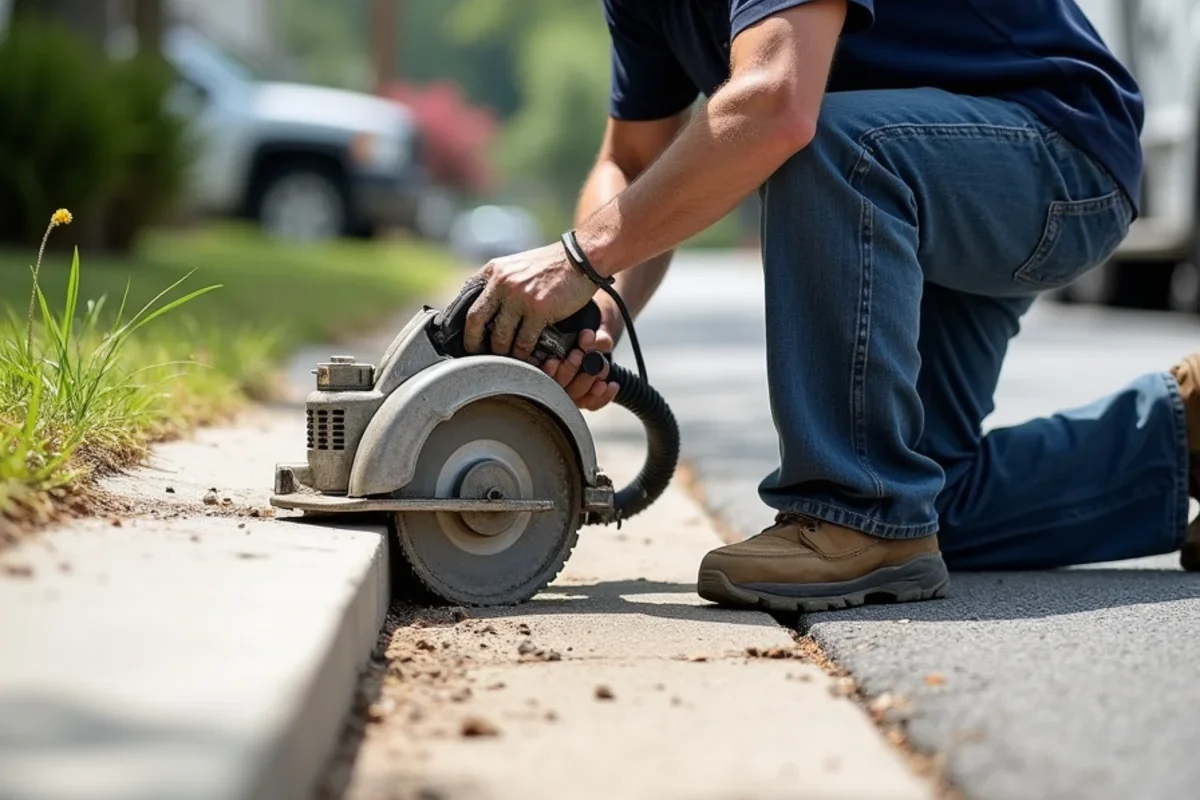
- Dustless Diamond Shaving: For sidewalk trip hazards between 1/4 inch and 3/4 inch, we shave the lifted edge at a compliant 1:12 ADA slope using HEPA-filtered diamond scarifiers. This eliminates tripping liability in 15 minutes per panel without jackhammers, barricades, or noise disruption.
- Deep Polyurethane Foam Injection: For sunken loading aprons and exterior slabs over stable subgrades, we inject expanding high-density structural foam through small 5/8-inch ports, lifting panels back to grade within 30 minutes.
- Off-Hours / Nighttime Fast-Track Pours: For high-traffic retail storefronts, bank drive-thrus, and industrial bays, our crews demolish, form, and pour using accelerated high-early-strength 4,500 PSI ready-mix overnight, allowing businesses to reopen without lost revenue.
DHEC Stormwater Compliance and Commercial Drainage Inlets
Commercial parking facilities in South Carolina must comply with South Carolina Department of Health and Environmental Control (SC DHEC) stormwater regulations:
- Catch Basin Apron Collapses: Stormwater catch basins in parking lots frequently develop subterranean soil washouts around their exterior masonry walls, causing the surrounding concrete pavement to collapse.
- Flowable Grout Encapsulation: We excavate failing catch basin perimeters, backfill voids with structural cementitious flowable fill, and pour heavy-duty 8-inch reinforced concrete collar aprons that withstand heavy traffic.
Commercial Concrete Audit and Maintenance Checklist
| Facility Area | Common Defect | Compliance Standard | Immediate Remedial Action |
|---|---|---|---|
| Storefront Walkways | Vertical joint lip > 1/4" | ADA Section 303 | Precision dustless diamond shaving or panel repour |
| ADA Curb Ramps | Damaged truncated domes | ADA Section 705 | Replace warning paver tiles (Safety Yellow / Red) |
| Dumpster Pad Apron | Rutting, punch-through cracks | Commercial Structural Code | Demo failed section; pour 8" 4,500 PSI pad with rebar |
| Parking Lot Curbs | Shattered curbs, exposed steel | Municipal Safety Code | Form and pour new monolithic 6x18" concrete curb |
| Catch Basin Collars | Sinking pavement around grates | SC DHEC Stormwater Code | Flowable fill void repair + 8" reinforced collar pad |
| Loading Dock Bays | Spalled control joints | OSHA Pedestrian Safety | Diamond route joint + install polyurea joint filler |
Next Steps: Schedule Your Commercial Facility Concrete Audit
Protect your commercial property against slip-and-fall liability and structural pavement failure. Contact FPC Construction at (833) 334-0468 for a free comprehensive commercial site survey, ADA trip hazard mapping, and itemized multi-phase proposal.
OSHA Slip-and-Fall Defense Documentation
Commercial property managers must maintain documented records of concrete maintenance to defend against slip-and-fall injury claims. Following every inspection and repair, FPC Construction provides facility managers with dated photographic logs, laser elevation surveys, and certificates of ADA compliance. These documents prove proactive facility maintenance, helping risk managers negotiate lower commercial liability insurance premiums and dismiss frivolous injury lawsuits.
OSHA & ADA Trip Hazard Compliance Thresholds for Commercial Foot Traffic
For commercial facilities throughout Aiken County, trip hazard liabilities represent a continuous operational risk. Under ADA Title III and OSHA 1910 walking-working surface standards, vertical surface changes between 1/4 inch (6.3 mm) and 1/2 inch (12.7 mm) require a beveled edge with a maximum slope of 1:2 (50% slope). Any vertical displacement exceeding 1/2 inch is classified as an immediate code violation and walking hazard that cannot simply be ground down with a scarifier. In high-traffic retail centers and industrial warehousing facilities, grinding down displaced slab edges exposes coarse aggregate, accelerating surface spalling and water intrusion into subbase soils. Commercial facility managers must implement proactive bi-annual elevation surveys using calibrated straightedges and digital levels to catch differential settlement before trip hazards trigger catastrophic slip-and-fall claims.
Lifecycle Cost Analysis: Polyurethane Injection vs. Slab Replacement
When evaluating commercial slab remediation, facility engineers must weigh immediate capital expenditure against long-term operational durability. Deep polyurethane foam injection (polyjacking) offers an attractive initial cost—typically 40% to 50% lower than full demolition and replacement—while allowing warehouses to remain operational with zero downtime. However, if slab settlement is driven by active water piping leaks, uncompacted clayey subsoils, or severe subbase voids from tropical storm runoff, foam injection provides only temporary mechanical support. If the underlying soil shear strength remains compromised, recurrent settlement often occurs within 24 to 36 months. In heavy forklift loading zones (Class 4 and Class 5 forklifts exceeding 10,000 lbs axle weight), complete slab replacement with dowel bar retrofit, 4,000 PSI high-early concrete, and 6x6 W2.9/W2.9 welded wire reinforcement provides a 25+ year structural lifecycle that yields far superior cost per square foot longevity.
Speak Directly with a South Carolina Concrete Specialist
Guaranteed 1-hour callback · On-site evaluation in 48 hours · Free written estimate
Article Frequently Asked Questions
Key takeaways and common homeowner inquiries answered by our concrete team.