
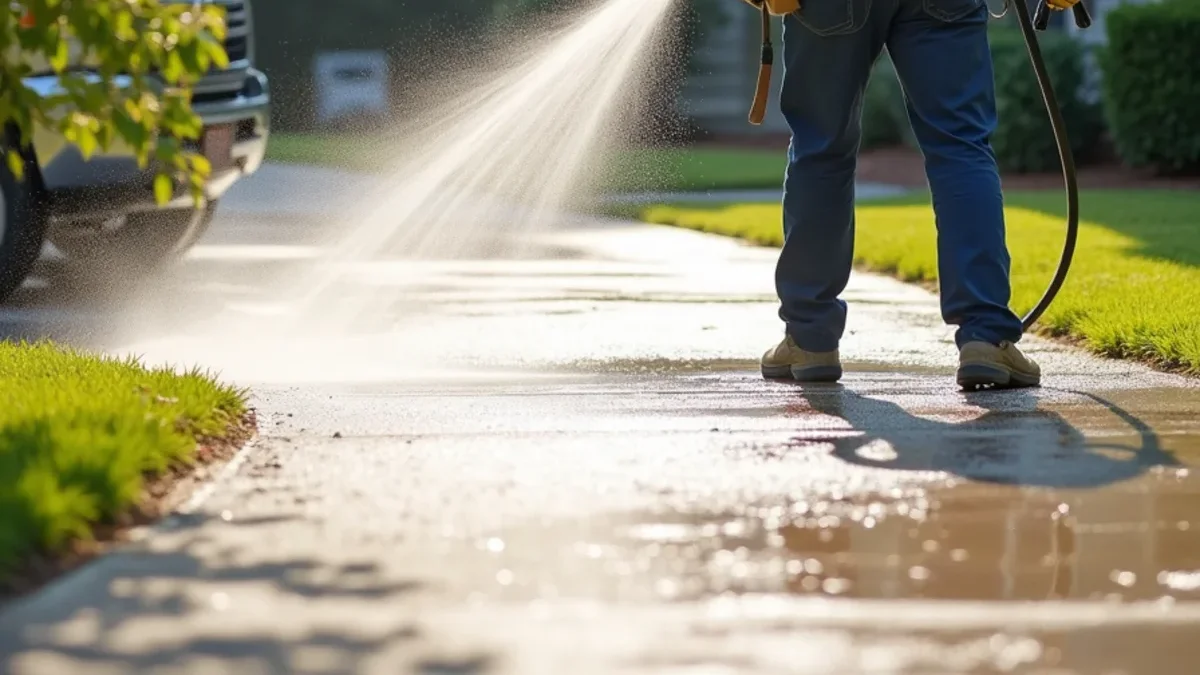
Maintaining concrete in South Carolina's hot, humid climate requires seasonal care to prevent organic biological staining, micro-crack expansion, and subgrade washout. An effective maintenance regimen includes annual pressure washing under 3,000 PSI, applying breathable penetrating silane-siloxane sealers every 3 to 5 years, routing and sealing contraction joints, and diverting downspout runoff.
Carolina Climate Pressures: Humidity, UV Rays & Downpours
Concrete is often considered an indestructible 'set-it-and-forget-it' building material. However, exterior flatwork in North Augusta, Aiken County, and the Midlands faces relentless environmental stressors unique to the Southeastern climate.
Between May and September, surface concrete temperatures routinely exceed 130°F under intense ultraviolet sun exposure, driving moisture out of the slab and accelerating chemical degradation. In winter, overnight temperatures fluctuate across the 32°F freezing mark, creating freeze-thaw cycles that expand water trapped inside porous concrete capillaries. Add to this 45+ inches of annual rainfall, heavy seasonal pine pollen, and invasive black Gloeocapsa magma algae, and unmaintained concrete can look aged, stained, and pitted within just three years.
Investing in proactive maintenance—supported by our specialized Concrete Driveway Repair and Sidewalk Trip Hazard & ADA Repair teams—extends the lifespan of your flatwork from 15 years to more than 40 years.
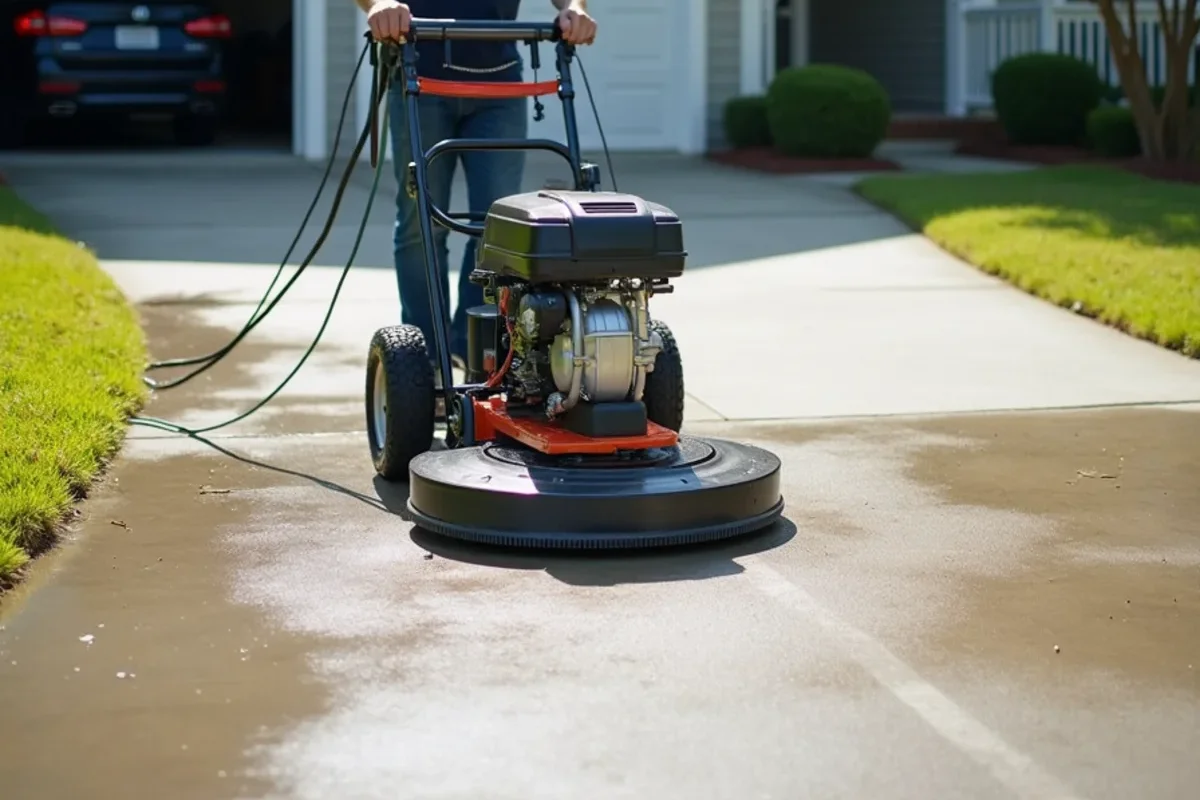
The 4-Season Concrete Maintenance Calendar for SC Homeowners
Follow this seasonal care calendar to keep your driveway, patio, and sidewalks looking pristine and structurally sound year-round:
Spring (March – May): The Deep Pollen & Algae Cleanse - Surface Washing: After oak and pine trees drop their heavy yellow pollen, perform a thorough surface cleaning using a rotary surface cleaner and biodegradable concrete detergent. - Inspect Joint Sealant: Check flexible polyurethane sealants in saw-cut control joints. If winter frost caused joint caulk to tear or pull away, scrape and re-apply sealant before summer thunderstorms arrive.
Summer (June – August): Drainage & Irrigation Audits - Lawn Sprinkler Alignment: Check irrigation heads. Sprinklers that continuously spray high-iron well water onto concrete cause stubborn orange rust stains and promote slick green moss. - Downspout Discharge Check: Ensure gutter downspouts discharge at least 5 to 10 feet away from driveway and patio margins to prevent high-velocity subgrade washouts in loose Sandhills sand.
Fall (September – November): Leaf Tannin & Joint Prep - Clear Decaying Leaves: Wet oak and sweetgum leaves contain high concentrations of tannic acid that leave dark brown, stubborn stains on concrete if left sitting through autumn rains. Sweep or blow leaves weekly. - Crack Routing & Sealing: Seal all hairline cracks exceeding 1/16 inch with elastomeric caulk before cold weather arrives.
Winter (December – February): De-icing Protection - Never Use Rock Salt (Sodium Chloride): De-icers melt ice into water that penetrates concrete pores and re-freezes, causing explosive surface scaling. Use non-corrosive traction sand or calcium magnesium acetate instead.
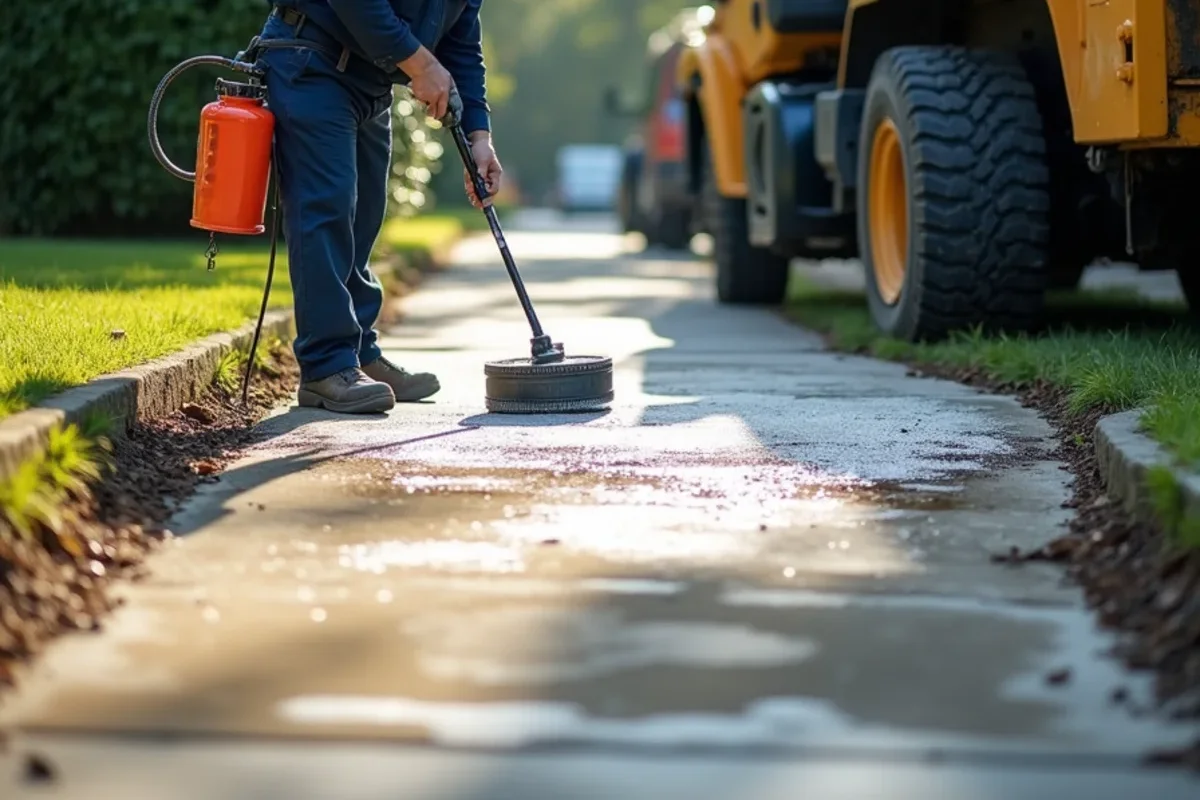
Safe Cleaning Protocols: Pressure Washer PSI Limits and Cleaners
The most common way South Carolina homeowners accidentally ruin their concrete driveways is by using an overpowered pressure washer incorrectly:
The Dangers of High PSI Etching Commercial pressure washers operating above 3,500 PSI or equipped with pinpoint zero-degree 'red tips' exert enough force to strip the microscopic cement paste layer right off the concrete. Once this protective paste is etched away, the underlying coarse gravel aggregate is permanently exposed, creating an unsightly, pitted, sandpaper-like surface that absorbs water rapidly.
Safe Pressure Washing Guidelines - Maximum Pressure: Keep pressure washer output between 2,000 and 2,800 PSI. - Use a Rotary Surface Cleaner: Attach a 16-inch dual-nozzle rotary surface cleaner. This ensures uniform spray distance, prevents 'zebra striping' spray wands, and cleans four times faster. - Nozzle Fan Tip: If using a handheld spray wand, maintain a minimum 12-inch distance and use a 25-degree (green) or 40-degree (white) fan nozzle. - Specialized Cleaners: Use oxygen bleach or alkaline cleaners for organic algae stains; use oxalic acid for sprinkler rust stains; and use enzymatic microbial degreasers for motor oil spots.
Joint Sealing: Keeping Saturated Water Out of the Subgrade
Contraction control joints are intentional grooves tooled or saw-cut into concrete slabs every 8 to 12 feet to control drying shrinkage. However, an unsealed control joint is an open door for stormwater to pour directly into the subgrade:
- Subgrade Washout: In Aiken County's sandy soils, water rushing through joints flushes sand out from beneath the concrete, creating hollow underground caverns that crack under vehicle weight.
- Weed and Ant Infiltration: Dirt and weed seeds settle into unsealed joints, creating unsightly weeds and fire ant mounds.
- Elastomeric Polyurethane Sealants: We recommend sealing all control joints and expansion joints with commercial-grade polyurethane sealants (such as SikaFlex-1a or Tremco Vulkem). These flexible sealants bond tightly to concrete, stretch with thermal movement, and completely lock out water.
Specialized Maintenance for Decorative Stamped Flatwork
Decorative stamped and colored concrete requires tailored maintenance to preserve its rich visual appeal:
- Wash & Reseal Interval: Clean and apply a fresh coat of commercial pure acrylic sealer every 2 to 3 years.
- Avoid Over-Sealing: Applying too many coats of sealer without allowing previous layers to wear can cause the surface to turn cloudy or milky white from trapped moisture.
- Non-Slip Additives: When resealing pool decks or outdoor patios, always mix micronized polymer anti-slip grip additives into the sealer to maintain safe pedestrian traction when wet.
Comprehensive Concrete Preventative Care Checklist
| Maintenance Task | Recommended Frequency | Key Products / Equipment | Primary Structural Benefit |
|---|---|---|---|
| Blow Off Leaves & Debris | Weekly in Autumn | Leaf blower, stiff push broom | Prevents permanent tannic acid leaf staining |
| Clear Gutter Downspout Runoff | Monthly | Flexible downspout extensions | Prevents subgrade sand washout under slab edges |
| Rotary Pressure Washing | Annually (Spring) | 2,500 PSI washer, surface cleaner | Eliminates slippery algae, mildew & pollen |
| Inspect & Caulk Control Joints | Every 2 to 3 Years | Polyurethane sealant, backer rod | Stops water from eroding subgrade beneath joints |
| Apply Penetrating Silane Sealer | Every 3 to 5 Years | Silane-siloxane penetrating sealer | Shields against freeze-thaw spalling & salt |
| Reseal Decorative Stamped Patios | Every 2 to 3 Years | UV acrylic sealer + non-slip grip | Restores vibrant color, prevents grease stains |
Next Steps: Professional Concrete Maintenance and Repair
If your concrete driveway, patio, or sidewalk in North Augusta or Aiken County needs professional cleaning, joint sealing, or structural crack repair, contact FPC Construction at (833) 334-0468 for a free on-site property evaluation and written estimate within 24 hours.
Seasonal Joint Caulk Inspection and Replacement
Inspecting flexible polyurethane joint caulk every autumn is vital to protecting your driveway subgrade. In South Carolina, summer thermal expansion compresses joints, while winter contraction widens them. If joint sealant pulls away from concrete sidewalls, water enters the subgrade during winter freezes. FPC Construction routes out failing caulk, installs closed-cell foam backer rods, and tools commercial elastomeric sealant flush with the slab to maintain an impenetrable waterproof seal.
Speak Directly with a South Carolina Concrete Specialist
Guaranteed 1-hour callback · On-site evaluation in 48 hours · Free written estimate
Article Frequently Asked Questions
Key takeaways and common homeowner inquiries answered by our concrete team.