
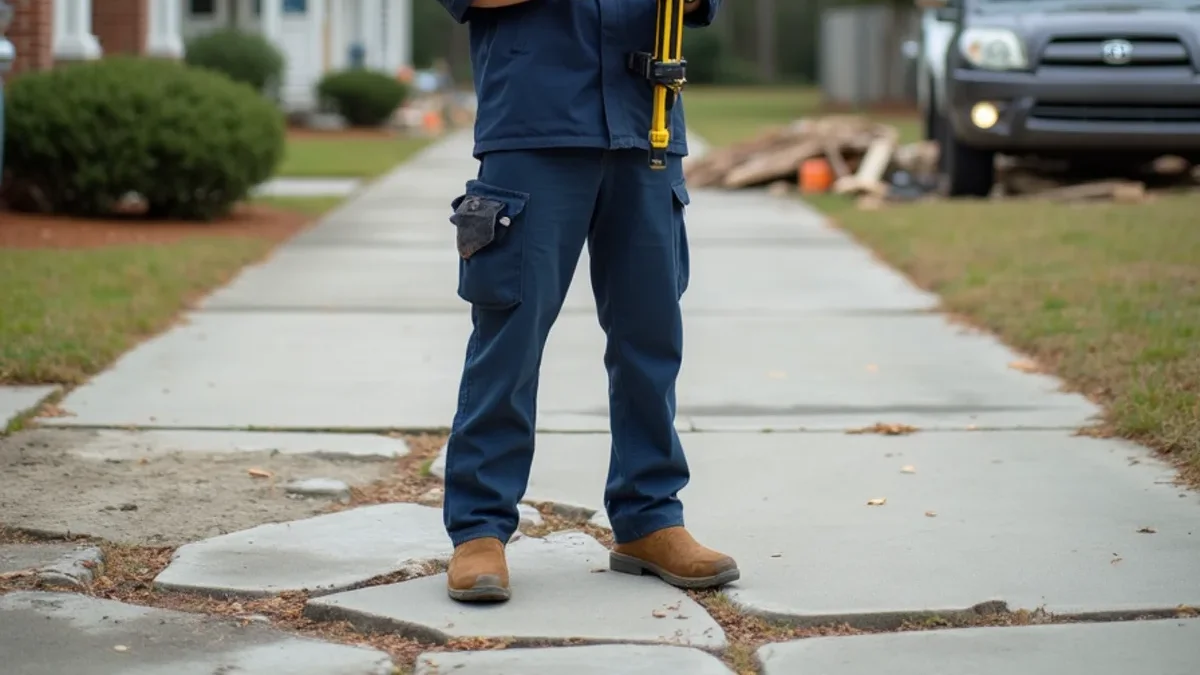
Homeowners insurance in South Carolina covers concrete driveway damage under Coverage B (Other Structures) when caused by sudden storm perils such as falling trees, lightning, or hurricane debris. However, claims are typically denied if insurers attribute the cracking to long-term soil settlement, erosion, or poor subgrade compaction without an itemized contractor causal report.
Understanding Coverage B: How SC Policies Treat Driveways
When severe weather sweeps through South Carolina—whether it is a summer microburst in Aiken County or catastrophic tropical winds from hurricanes like Helene—property owners often assume their entire property is protected under their primary dwelling coverage. In reality, detached concrete flatwork is governed by a distinct policy section: Coverage B (Other Structures).
On standard South Carolina ISO HO-3 homeowners insurance policies, Coverage B is automatically set at 10% of your primary dwelling coverage (Coverage A). For example, if your home is insured for $350,000, your Coverage B limit provides up to $35,000 to repair detached structures, which includes detached garages, sheds, fences, and your concrete driveway.
However, collecting insurance funds for concrete repair requires navigating strict policy language. Insurance covers sudden and accidental direct physical loss, not deferred maintenance. Investing in specialized Storm Damage Concrete Repair and documented Concrete Driveway Repair scopes ensures your claim meets the rigorous burden of proof demanded by insurance adjusters.
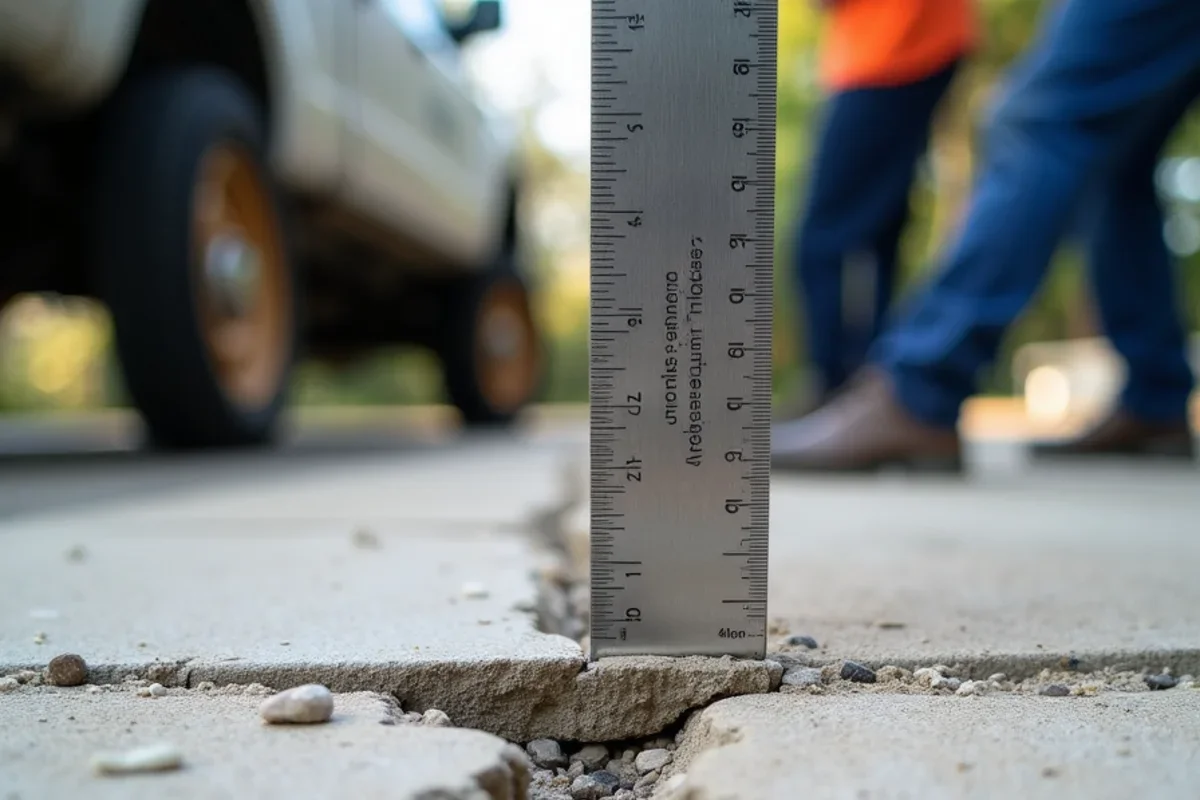
Covered Perils vs Excluded Perils Comparison Table
The following comparison matrix outlines how South Carolina property claims adjusters evaluate concrete driveway damage:
| Peril Category | Specific Scenario | Standard Policy Status | Contractor Evidence Required |
|---|---|---|---|
| Fallen Tree Impact | Mature pine tree crushes driveway panel | Covered (Windstorm peril) | Photos of trunk resting on cracked panel, impact crush marks |
| Root Plate Upheaval | Tree root ball lifts and snaps driveway | Covered (Windstorm peril) | Root plate elevation photos, subgrade void measurements |
| Lightning Strike | Lightning hits nearby tree, spalling concrete | Covered (Fire/Lightning) | Surface explosive spall documentation, scorched debris |
| Vehicle / Equipment Collision | Delivery truck or emergency crane cracks drive | Covered under driver's auto liability | Police report, tire track measurements, DOT license plates |
| Subgrade Washout / Rain Runoff | Heavy storm rain erodes Sandhills sand under drive | Disputed / Often Excluded as 'Water' | Structural flowable fill proof, proof of sudden downspout scouring |
| Gradual Settlement / Kaolin Swelling | Driveway slowly sinks over 10 years | Excluded (Earth movement / Wear & Tear) | Ineligible for insurance claim; requires private owner repair |
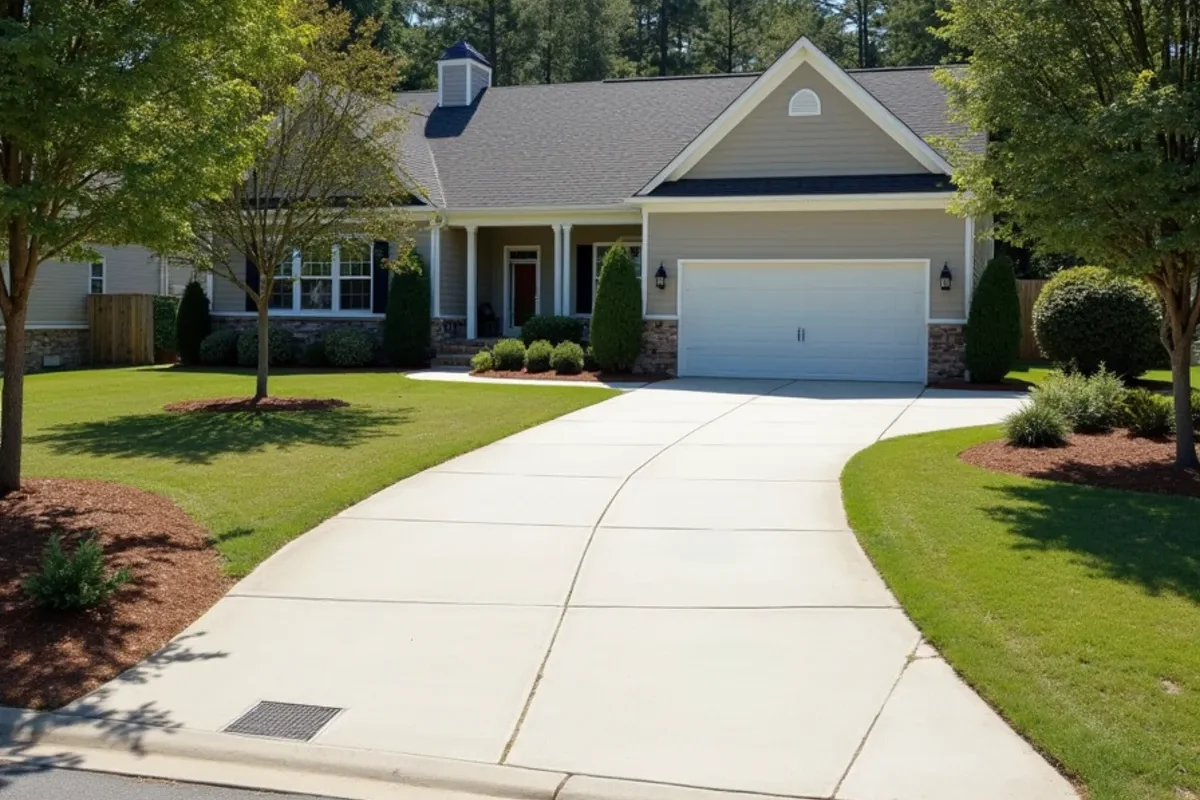
The Adjuster's Favorite Defense: Settlement vs Impact
The single most common reason insurance adjusters deny driveway storm claims in South Carolina is by labeling the damage as pre-existing 'earth movement' or 'subgrade settlement'. Because standard policies exclude damage caused by soil subsidence or hydrostatic pressure, an adjuster visiting your property will examine cracks looking for signs of age.
Here is how an insurance adjuster attempts to deny your claim:
- Dirt in the Cracks: If dirt, weeds, or lichen have gathered inside a hairline crack, the adjuster will claim the fracture existed long before the storm.
- Control Joint Displacements: The adjuster will claim the concrete simply cracked along natural contraction joints due to normal South Carolina thermal expansion.
- Absence of Immediate Impact Markings: If tree removal crews cut up the tree and swept the driveway before taking photos, the adjuster will claim there is zero proof a tree ever struck the concrete.
To counter these tactics, FPC Construction provides adjusters with forensic structural evidence. We document fresh, un-weathered fracture aggregate faces, crushed surface paste at point loads, and optical laser elevations proving sudden cantilever failure.

5-Step Checklist for Documenting Concrete Storm Claims
Follow this battle-tested checklist before meeting your insurance adjuster on-site:
- 1. Photograph Before Any Tree Cutting: Take at least 20 high-resolution photos showing the fallen tree, root ball, and concrete from multiple angles. Capture wide contextual shots and tight macro shots of crushed concrete aggregate.
- 2. Date-Stamp Weather Reports: Download official National Weather Service (NWS) wind gust records, hail reports, or microburst radar loops for your specific zip code on the date of loss.
- 3. Protect Against Secondary Damage: Ensure tree removal contractors lay 3/4-inch polyethylene ground protection mats so heavy equipment outriggers do not crush undamaged panels.
- 4. Request a Licensed Concrete Contractor Inspection: Call FPC Construction at (833) 334-0468 for a formal on-site structural damage assessment before the insurance adjuster arrives.
- 5. Demand a Joint On-Site Walkthrough: Insist that your concrete contractor walk the property side-by-side with the insurance adjuster to explain structural subgrade mechanics in person.
Calculating Payouts: Replacement Cost vs Actual Cash Value
When your claim is approved, how much money will you actually receive? South Carolina policies calculate payouts based on two different valuation methods:
Replacement Cost Value (RCV) Under an RCV policy, the insurer pays the full modern cost to demolish the broken panels, excavate the subgrade, install a 4-inch compacted aggregate base, and pour new 4,000 PSI concrete with steel rebar, minus your deductible. The insurer often issues an initial Actual Cash Value check, holding back 'depreciation' until your contractor submits the final certificate of completion.
Actual Cash Value (ACV) Under an ACV policy, the insurer depreciates your driveway based on age (typically 2% to 4% per year of age). If your driveway is 15 years old, they may deduct 40% from the claim total, leaving you with substantial out-of-pocket expenses.
Why Line-Item Contractor Scopes Win Appeals
When adjusters write estimates using automated software like Xactimate, they frequently use generic national unit costs that fail to account for South Carolina geological realities. They omit critical line items such as:
- CR-14 Crusher-Run Stone Base: Adjusters frequently budget only for pouring concrete directly over dirt, ignoring necessary subgrade compaction.
- Grade 60 Steel Rebar Reinforcement: Adjusters often price cheap, unreinforced concrete or flimsy wire mesh instead of tied #4 rebar elevated on chairs.
- SCDOT Encroachment Permitting: Adjusters omit mandatory municipal and state highway encroachment permit fees for driveways connecting to public roads.
At FPC Construction, our written proposals itemize every cubic yard of ready-mix, every linear foot of saw-cutting, every ton of aggregate, and every permit requirement. When adjusters see an engineering-backed scope from a licensed South Carolina contractor, claims are approved faster and for full fair value.
Next Steps: Maximize Your Concrete Insurance Claim
If your concrete driveway, patio, or sidewalk was damaged during a storm in North Augusta, Aiken, or surrounding South Carolina communities, do not navigate the insurance claim process alone. Call FPC Construction today at (833) 334-0468 for a free on-site structural damage evaluation and itemized insurance scope.
Speak Directly with a South Carolina Concrete Specialist
Guaranteed 1-hour callback · On-site evaluation in 48 hours · Free written estimate
Article Frequently Asked Questions
Key takeaways and common homeowner inquiries answered by our concrete team.