
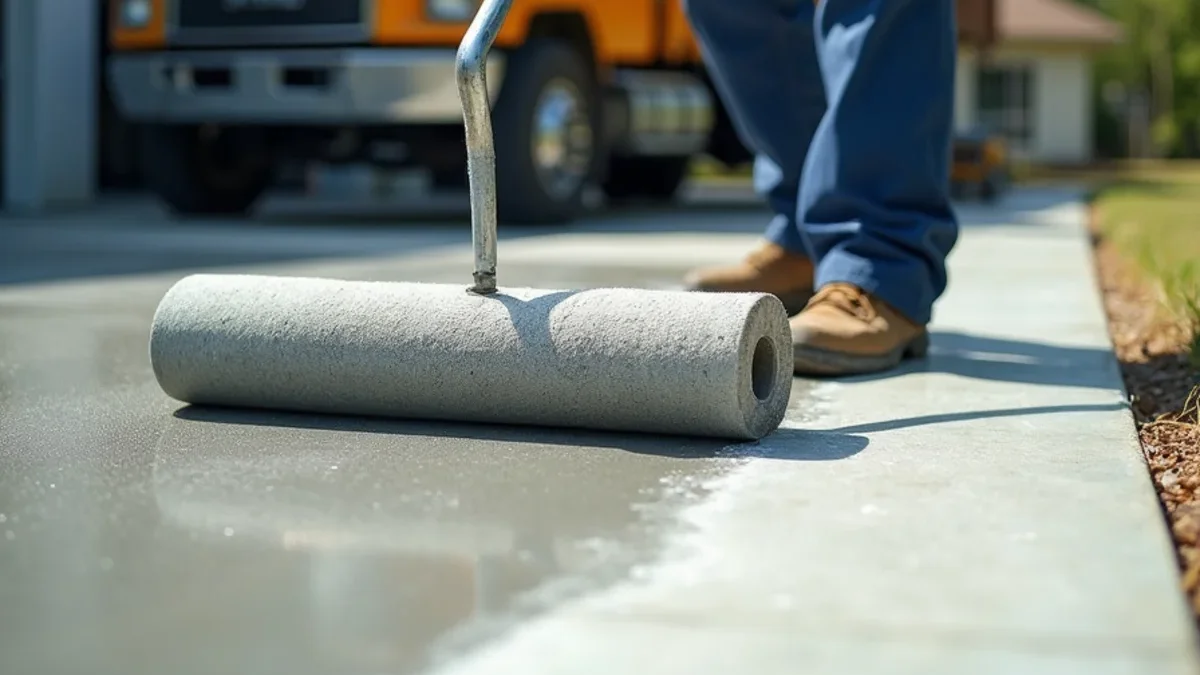
Sealing concrete in South Carolina shields flatwork against intense UV solar degradation, biological mold and algae growth, and stormwater subgrade infiltration. Standard broom-finish driveways should be sealed with penetrating silane-siloxane sealers every 3 to 5 years, while decorative stamped patios require UV-resistant acrylic sealers every 2 to 3 years.
Why Sealing Concrete Is Essential in South Carolina's Climate
Concrete appears solid and impermeable to the naked eye. Under a microscope, however, cured concrete is a dense porous sponge interlaced with thousands of microscopic capillary pores, micro-fissures, and air voids. In South Carolina's climate—where annual rainfall averages 48 inches and summer heat indexes frequently cross 100°F—unsealed concrete is vulnerable to rapid environmental degradation.
When rainwater saturates unsealed concrete in Aiken County and North Augusta, it brings dissolved minerals, motor oil, tree tannins, and fertilizer chemicals deep into the slab. In winter, trapped capillary water freezes, expands by 9% in volume, and creates hydraulic pressure that causes surface scaling and flaking. In summer, intense ultraviolet radiation oxidizes surface cement paste, fading decorative color pigments.
Investing in professional sealing—supported by our certified Concrete Driveway Installation and Stamped Concrete crews—creates a durable barrier that preserves your investment for decades.
Penetrating Silane-Siloxane vs Topical Acrylic Sealers
Choosing the right concrete sealer requires understanding the chemical difference between penetrating and topical film-forming chemistries:
Chemistry 1: Penetrating Silane-Siloxane Sealers (Best for Driveways) Penetrating sealers are formulated with microscopic silane and siloxane molecules that penetrate 1/8 to 1/4 inch deep into the concrete's capillary network. They chemically bond with free lime and silica in the concrete matrix, forming an invisible, hydrophobic silicone resin barrier: - Zero Appearance Change: Penetrating sealers leave zero surface film, zero gloss, and zero plastic sheen. The concrete looks 100% natural. - Preserves Full Traction: Because there is no surface film, slip resistance is identical to untreated broom-finished concrete. - Deep Hydrophobic Protection: Water beads up on the surface and cannot penetrate the pores, preventing freeze-thaw spalling and salt damage. - Extended Lifespan: Penetrating sealers do not wear off from tire friction or foot traffic, lasting 3 to 5 years.
Chemistry 2: Topical Pure Acrylic Sealers (Best for Stamped Concrete) Topical sealers form a continuous protective plastic film on top of the concrete surface: - Enhances Color & Depth: Acrylics deepen iron-oxide color tones, creating a vibrant, rich 'wet-look' sheen (available in matte, satin, or high-gloss finishes). - Stain Shield: The surface film prevents barbecue grease, motor oil, and wine from penetrating the concrete. - UV Inhibitors: Protects decorative integral colors from fading under harsh South Carolina sun exposure. - Lifespan: Topical films wear gradually under vehicle tires and foot traffic, requiring re-application every 2 to 3 years.
Comprehensive Concrete Sealer Comparison Table
| Sealer Formulation | Chemical Mechanism | Visual Finish | Expected Durability | Best Application in SC | Average Cost per Sq Ft |
|---|---|---|---|---|---|
| Penetrating Silane-Siloxane | Subsurface chemical bond | 100% Natural / Invisible | 3 to 5 Years | Driveways, sidewalks, commercial aprons | $0.85 – $1.50 |
| Solvent-Based Pure Acrylic | Breathable topical film | High-Gloss 'Wet Look' | 2 to 3 Years | Stamped patios, decorative pool decks | $1.25 – $2.25 |
| Water-Based Acrylic | Low-VOC topical film | Low-Gloss / Satin | 1 to 2 Years | Screened porches, interior garage slabs | $1.00 – $1.75 |
| Epoxy / Polyaspartic Coating | Heavy-build polymer barrier | High-Gloss solid/flake | 5 to 10 Years | Interior workshops, enclosed garages | $4.50 – $8.00 |
Step-by-Step Professional Concrete Sealing Process
Applying concrete sealer correctly requires strict adherence to professional preparation standards:
- Step 1: 28-Day Hydration Verification: Newly poured concrete must cure for at least 28 days before sealing. Applying sealers to fresh concrete traps excess water, causing blistered films.
- Step 2: Deep Chemical Cleaning: We pressure-wash the slab using biodegradable degreasers to remove all dirt, algae, oil spots, and efflorescence minerals.
- Step 3: Complete Moisture Drying (48-Hour Rule): The concrete must be bone-dry. We require at least 24 to 48 hours of dry weather before application. Sealing over damp concrete causes permanent cloudiness.
- Step 4: Weather & Temperature Monitoring: Application must occur when ambient temperatures are between 55°F and 85°F, out of direct blistering midday sun.
- Step 5: Professional Application in Thin Coats: We apply sealer using commercial solvent-resistant sprayers, back-rolling with high-density short-nap rollers to ensure uniform coverage without pooling. For stamped patios, we apply two thin coats rather than one heavy coat.
- Step 6: Non-Slip Polymer Additive Integration: For pool decks and patios, we broadcast micronized polymer anti-slip grip additives into the topcoat to ensure safe wet traction.
Common DIY Mistakes: Moisture Blushing, Bubbling & Over-Sealing
Homeowners attempting DIY sealing frequently encounter severe aesthetic defects:
- Moisture Blushing (Milky White Cloudiness): Applying topical acrylic sealer over damp concrete traps moisture under the plastic film. The water turns the sealer milky white. Correcting this requires applying xylene solvent washes to re-melt and re-cure the acrylic resin.
- Solvent Bubbling: Applying sealer in direct 95°F South Carolina summer sunlight causes solvents to flash-evaporate before the resin levels out, trapping tiny air bubbles in the finish.
- Over-Sealing / Plastic Flaking: Re-applying acrylic sealer every year without allowing previous layers to wear creates an overly thick plastic build-up that cracks, turns hazy, and flakes off like sunburned skin.
Cost vs ROI: How Sealing Protects Your Concrete Investment
Professional concrete sealing costs between $0.85 and $2.00 per square foot, representing a tiny fraction of the $8.50 to $14.00 per square foot replacement cost of concrete flatwork. Sealing a $6,000 two-car driveway costs approximately $600 every four years—averaging just $150 per year to double the functional lifespan of the concrete, eliminate oil stains, and maintain peak curb appeal.
Next Steps: Protect Your Concrete Surfaces Today
Keep your driveway, patio, or commercial flatwork protected against South Carolina weather. Contact FPC Construction at (833) 334-0468 for a free on-site evaluation, sealer recommendation, and detailed written quote within 24 hours.
Chemical Efflorescence Removal Prior to Sealing
Before applying penetrating or topical acrylic sealers in South Carolina, technicians must remove subgrade efflorescence—powdery white calcium carbonate salts pushed to the surface by capillary moisture. FPC Construction performs chemical acid etching and neutralizer rinses using specialized concrete cleaners. Opening the capillary pores and neutralizing surface pH ensures maximum sealer penetration and chemical bonding, preventing premature delamination or cloudiness.
Silane-Siloxane Penetrating Breathability vs. Topical Acrylic Blistering Under Summer Heat
A critical technical decision for South Carolina homeowners is choosing between penetrating sealers and topical acrylic coatings. While high-gloss topical acrylics provide a wet-look sheen, they form a solid impermeable film across the concrete surface. Under Aiken County's intense summer sun, ground moisture trapped beneath the slab vaporizes, generating significant vapor pressure. Because topical acrylics cannot breathe, this trapped vapor creates unsightly milky white blisters, bubbling, and premature delamination. Conversely, penetrating silane-siloxane sealers penetrate 1/4 to 3/8 inch deep into concrete microscopic pores, chemically bonding to form a hydrophobic barrier that repels liquid water while maintaining 100% vapor breathability. This allows subterranean moisture vapor to escape harmlessly without clouding or peeling the surface finish, delivering 7 to 10 years of invisible moisture protection.
Moisture Vapor Emission Rate (MVER) Testing Prior to Topical Applications
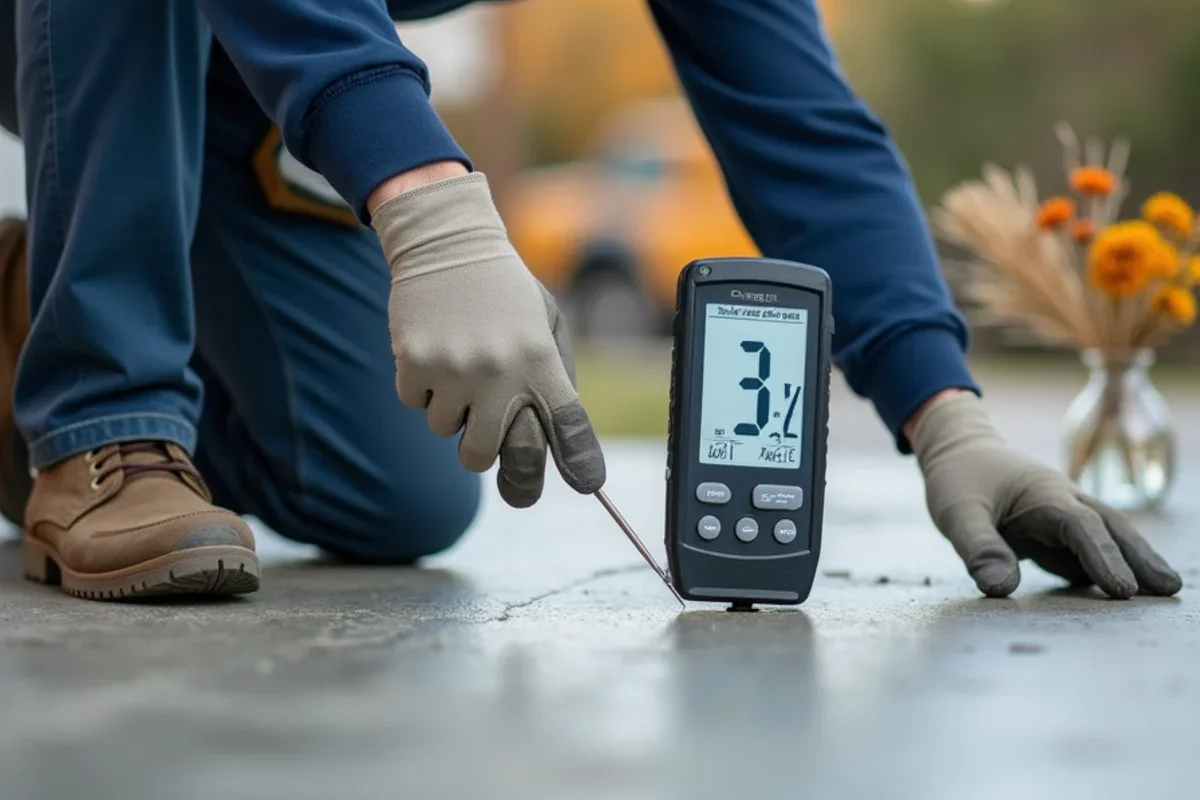
Before applying any premium decorative epoxy, polyaspartic, or high-solids topical sealer to garage floors or covered patios, rigorous moisture testing is mandatory. Professional concrete technicians conduct ASTM F1869 Anhydrous Calcium Chloride tests or ASTM F2170 relative humidity probe testing to measure moisture vapor emission rates (MVER). Concrete slabs emitting more than 3 lbs of moisture per 1,000 sq ft over 24 hours will cause topical coatings to blister and fail within months of application. If moisture testing reveals high vapor emissions, contractors must apply a dedicated moisture-mitigating epoxy primer before applying topcoats, ensuring permanent chemical adhesion and protecting the homeowner's decorative investment against vapor-induced failure.
Speak Directly with a South Carolina Concrete Specialist
Guaranteed 1-hour callback · On-site evaluation in 48 hours · Free written estimate
Article Frequently Asked Questions
Key takeaways and common homeowner inquiries answered by our concrete team.